Menu

The International Amateur Radio Union has been the worldwide voice of radio amateurs, securing and safeguarding the amateur radio spectrum since 1925. Read more about us →

News

Indonesia Earthquake — 15th August 2026 — UPDATE

Ageng Aditya, YB1BTM the Chair of the IARU-R3 Disaster Communication Committee reports that following the major magnitude 7.7 earthquake which struck the East Nusa Tenggara (NTT) region of Indonesia early in the morning local time amateur radio operators in Indonesia and throughout the Region are respectfully requested to keep 7.110 MHz clear as it is being used for HF emergency communications, while 145.100 MHz is being used for local VHF coordination in affected areas.

Preliminary reports indicate damage to buildings and disruption to normal communications infrastructure in several affected areas so all amateur radio operators are requested to give absolute priority to emergency and disaster-relief traffic on these frequencies and to monitor without transmitting unless specifically requested to assist.

The IARU Region 3 Disaster Communication Committee, together with the relevant emergency communication coordinators and IARU Region 3 officials, remains on standby and is coordinating as necessary to support any requests for amateur radio emergency communication assistance.

They appreciate the cooperation and discipline of the amateur radio community during this emergency.

UPDATE 31st August
Ageng YB1BTM confirms that the emergency frequencies are no longer in use for this earthquaks in Indonesia. He would like to thank all fellow members of the disaster communication committee and amateurs for the support during the rescue operation. 

Print This Post

Amateur radio active in Colombian Earthquake 10-Aug-2026 — UPDATE

Carlos Alberto Santamaría González, CO2JC the IARU R2 Emergency Coordinator reports that members of the Colombian Amateur Radio League (LCR) are active alongside the Colombian Red Cross following the 7.4 magnitude earthquake at 07​:34 on 10th August 2026. The event registered a magnitude of 7.4 and was followed by several aftershocks exceeding magnitude 2.0, including one of 4.8 at 08​:18 local time.

Faber Mosquera (HK6F), the emergency coordinator for the Colombian Amateur Radio League has said that damage assessments were underway in the departments of the Coffee Axis and the Colombian Pacific coast — the areas most severely affected — and that he was already coordinating with the
National Disaster Risk Management System.

In Colombia, the LCR uses the International Amateur Radio Union Region 2 (IARU R2) frequencies for emergency communications, as follows:

80 m: 3985 kHz
40 m: 7060, 7240, and 7275 kHz
20 m: 14300 kHz
17 m: 18160 kHz
15 m: 21360 kHz
2 m: 146.520 MHz (simplex)

IARU Region 2 asks all fellow radio amateurs to keep these frequencies clear and simply monitor them, in case assistance is needed by our Colombian colleagues.

UPDATE 0500UTC 11th August.

Radio Amateurs from the Asociación de Radioaficionados del Eje Cafetero (ASOREC) —an LCR-affiliated group (call sign HK6REC) based in Dos Quebradas, Risaralda— have made their communications infrastructure, including repeater stations, available to support communications in Pereira. Pereira is believed to be the area that sustained the most significant damage from the earthquake.
ASOREC volunteers are operating under the leadership of their president, Nahir Rios (HK6JSP), and —at least for the time being— have supplies of water, food, and backup power sufficient for 72 hours.

This Monday evening, colleagues from the Radio Club of Antioquia maintained contact with ASOREC members in Dos Quebradas via the repeater station located on Padre Amaya Hill in Medellín (operating on 146.910 MHz), as well as through the Eje Cafetero frequency of 146.070 MHz. Additionally, we learned that the Liga Radio Manizales (LRM) —call sign HK6RM— linked their Echolink* system to the national frequency, thereby establishing a connection with ASOREC. Meanwhile, Faber Mosquera (HK6F), the LCR’s Emergency Coordinator, joined the USAR COL-17 team —the Urban Search and Rescue unit of the Colombian Red Cross (Quindío Chapter) —as it deployed to the city of Cali.

This page will be updated if and when further information becomes available.

Print This Post

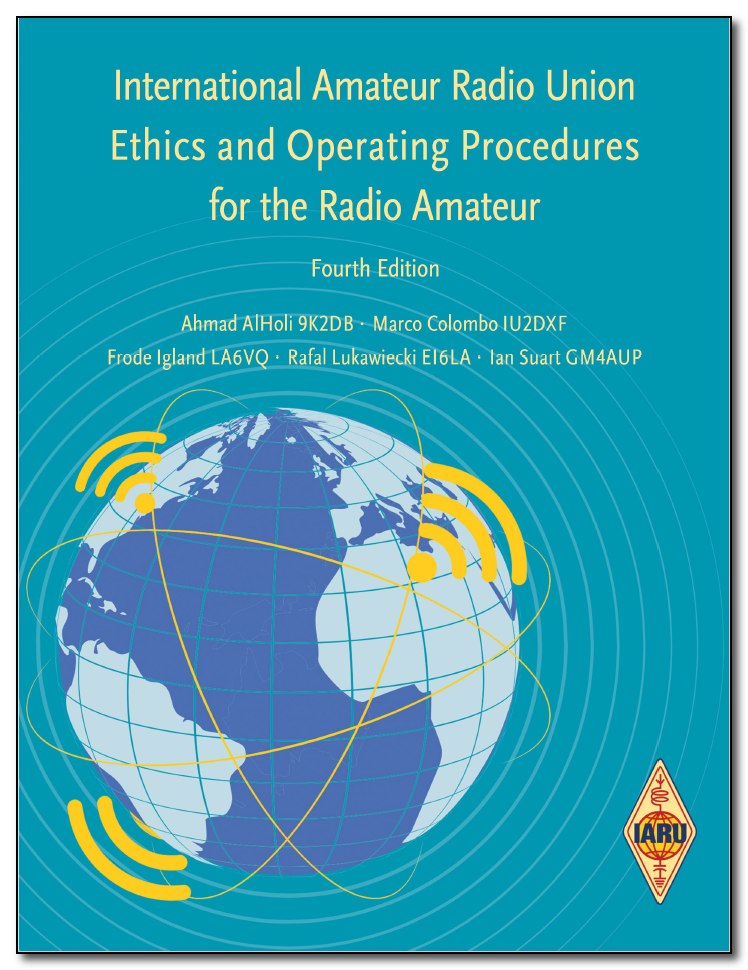
Ethics and Operating Procedures Edition 4 release announcement

We are pleased to announce the official release of the Ethics and Operating Procedures for the Radio Amateur, Fourth Edition. This revision incorporates the latest developments and best practices in the field of amateur radio. We believe these updates are essential to upholding the high standards of amateur radio and ensuring our community remains at the forefront of technological innovation and ethical operating practices.

We also wish to acknowledge the valuable comments and the extensive feedback received from the IARU Member Societies on an earlier draft of this new edition. All input has been carefully reviewed, and the document has been updated as necessary.

We extend our sincere appreciation to the editorial team for their valuable contributions in updating this guide. Their dedication, attention to detail, and commitment to upholding the highest standards of amateur radio have been instrumental in enhancing this important document.

The editorial team:

  • Rafal, EI6LA
  • Ian, GM4AUP
  • Marco, IU2DXF
  • Frode, LA6VQ
  • Ahmad, 9K2DB
  • Silvano Ancelotti (Graphic Designer)

Special Acknowledgment also goes to:

  • Remy, PA0AGF
  • David, VA7DXX
  • David, F4JKS

Thank you to everyone who contributed their time and expertise to ensure this document remains the benchmark for amateur radio operations globally.

The Ethics and Operating Procedures web pages and documents can be found through the left-hand menu “On the Air” + “Codes of Conduct” or by the link https://​www.iaru-r1.org/on-the-air​/eop/

Print This Post

Events