Menu
ITU‑R Working Party 5A is making progress on the 23cm amateur band and RNSS (radio navigation satellite service) coexistence.

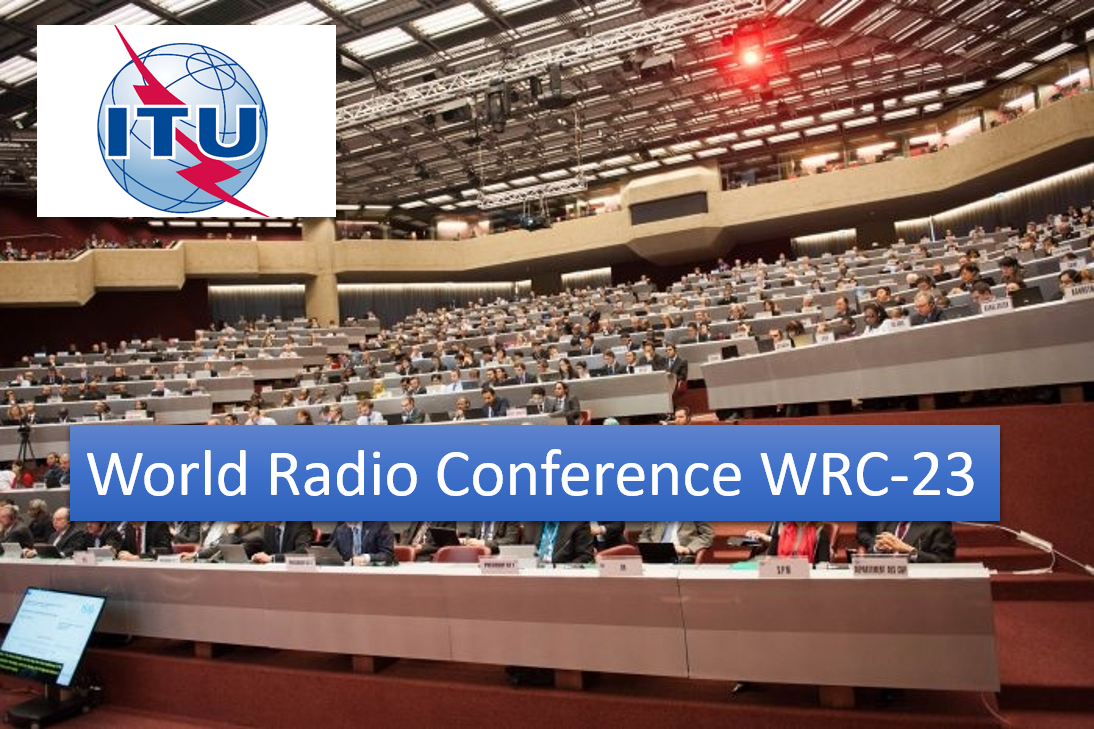
Over the period 14th to 25th November 2022, the preparatory work for WRC-23 agenda item 9.1b continued in ITU‑R Working Party 5A (WP5A). Two deliverables are under discussion:

1) Draft ITU‑R Report M.[AMATEUR_CHARACTERISTICS] – this reports on the specific 23cm band amateur and amateur satellite service technical parameters and operational characteristics used in the studies now published in ITU‑R Report M.2513 – 0.

2) Draft ITU.R Recommendation M.[AS_GUIDANCE] – this will recommend guidance that national administrations can take to facilitate the protection of the radio navigation satellite service from harmful interference from amateur radio stations.

Since the previous WP5A meeting the IARU global WRC23 9.1b team led by G4SJH has been consulting with the amateur community resulting in a contribution to the draft guidance recommendation. As usual, the IARU participated in the meeting to support the contribution and take part in the ongoing discussion and negotiations. Contributions were also provided by a number of national administrations and a summary report of the meeting can be downloaded.

In general the development of the recommendation is moving in a suitable direction and many of the IARU proposals remain in the draft document that will go forward to the next meeting for further work.

Meanwhile in CEPT the work in project team SE40 continues with their development of an ECC Report on the same coexistence problem and also met during November (3 – 4th).

The work on this topic will continue throughout next year both in ITU‑R and in the regional telecommunications organisations and the IARU is committed to ensure the studies are properly interpreted and that due account is taken of the realities of amateur operations in this band.

Print This Post

WRC23 AI9.1b: ITU‑R Study Group 4 finalises the 23cm/RNSS study report

During the period 7 – 13 September 2022, the IARU once again participated in the preparatory work for WRC-23 agenda item 9.1b in ITU‑R Working Party 4C (WP4C). The IARU summary report on the WP4C meeting can be found here.

Updated studies were provided by France and new studies were contributed by the Russian Federation (GLONASS), China (COMPASS) and Japan.

The IARU provided a contribution providing information agreed in WP5A highlighting the low duration of “busy times” for amateur activities in the 23cm band. This information was adopted into the draft report. Whilst the studies confirm the potential for interference to occur into co-frequency RNSS receivers in almost the entire band, all the studies have assumed only static scenarios without any consideration of the geographic distribution and density of amateur transmitters or the temporal aspects of amateur or RNSS operations. Some studies take account of antenna patterns, but many results and conclusions focus only on worst case main beam consideration. The IARU Region 1 has published a commentary document on these aspects available here.

As a result of these studies and the regulatory status of the amateur service allocation, our ability to operate in certain parts of the band and at the power levels allowed today is likely to be constrained if regulators want to protect the RNSS receivers. This discussion will continue in the development of the Guidance Recommendation in ITU‑R WP5A.

WP4C plenary agreed to elevate the document to Draft New Report status and passed it to Study Group 4 (SG4) for adoption. Therefore drafting work is complete.

Study Group 4 met on September 23rd and adopted the report for publication. IARU is totally engaged in the discussion that will continue in WP5A to ensure that the amateur services can continue to develop in this band and allow all the amateur applications in use today to continue.

Print This Post

23cm Band and WRC-23 — Discussion Document

As the WRC-23 approaches so the studies regarding AI9.1b (23cm and RNSS) are working towards conclusions. However the IARU is not content that all the operational aspects of the amateur service usage of the 1 240- 1 300 MHz band are being properly considered to develop an acceptable compromise for all concerned parties. You can find some more detail on the areas of concern in this discussion paper posted in the global IARU WRC23 web pages on this topic. See IARU Perspective on the AI9.1b Progress — September 2022.

Print This Post

WRC23 preparatory activities are intensifying

As WRC23 gets closer so the preparatory activities for all the agenda items are increasing in intensity. The most pressing for the amateur community is the 23cm band radio navigation satellite service (RNSS) coexistence agenda item 9.1b. The IARU engagement is continuing with the studies in the regulatory institutions as well as amongst the amateur community. As detailed proposals are starting to emerge so the amateur community needs to be ready to defend its interests in this band.

Most recently the Region 1 PRC and SRLC collaborated to provide a consultation response to the European Radio Spectrum Policy Group (RSPG) that develops “Opinions” on the various WRC23 agenda items used by the European Union to develop its positions on the agenda items. Of course the 23cm band related agenda item 9.1b features heavily in the response. The full IARU R1 response can be found here. This is a parallel activity to the EU consultation to which the IARU responded just a few weeks ago (here).

Following the presentations given during the IARU R1 interim conference and the HamRadio2022 event, the IARU was kindly invited to present the 23cm band situation to the eme community at the 19th EME conference in Prague. Reactions were mixed. However the IARU maintains its objective to find a solution that can facilitate all the amateur radio applications active in the band today (including eme operations) even if some compromises will be inevitable.

To progress the 23cm band studies, ITU‑R Working Party 4C will meet during the second week of September. At this meeting the technical studies regarding the amateur service and radio navigation satellite service will be developed further. The IARU global 9.1b team is preparing contributions and will be participating in the meeting.

During the same week the European CEPT will be busy with its own Conference Preparatory Group (CPG) project team (PTA) focussing on the future WRC agenda items (so-called WRC Agenda Item 10). The discussion will develop the CEPT views on those items that CEPT will propose. Already some draft proposals are touching on spectrum bands of interest to the amateur service therefore IARU volunteers will be attending and making contributions this meeting too.

Print This Post

IARU R1 responds to EU consultation on WRC23 agenda items and CEPT continues RNSS/23cm band study work in WG SE40
EU WRC23 Call for Evidence

In a collaboration between the SRLC and the PRC an IARU R1 response has been provided to the European Union consultation on the WRC23 agenda items. All the agenda items of interest to the IARU are covered with particular attention paid to the AI9.1b issue on the GALILEO / 23cm band amateur service coexistence. This is an important messaging activity and the IARU response again underlines the IARU view that with only two cases of interference recorded globally, the potential for interference is being over-stated and that any regulatory solutions should be proportionate, realistic and appropriate and should not hinder the future development of amateur services. The IARU would be pleased if member societies could share these same views with their national regulators. The full IARU R1 response can be found [here].

The PRC/SRLC is also developing a response to the European Commission Radio Spectrum Policy Group (RSPG) on the same topics.

CEPT Project Team SE40

Secondly the CEPT project team SE40 that is carrying out the CEPT studies on the RNSS/23cm band topic met during the week 25 – 28th July 2022. The IARU provided a contribution and participated in the meeting supported by USKA. Good progress was made but further work continues to be required to finalise the conclusions from the studies. The IARU continues to be concerned about the lack of consideration being given to the low probability of interference and more work is needed on this aspect. A summary report can be found here.

Print This Post